
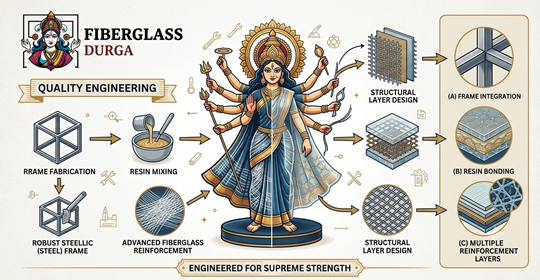
How Maa Durga Fiberglass Idols Are Engineered for Strength: Frame, Reinforcement, Resin & Structural Design

When people look at a Maa Durga idol, they usually notice the face, eyes, jewellery, crown, weapons and overall artistic beauty first. What remains hidden is the structure that allows the sculpture to retain its shape and withstand handling, transportation and installation.
A Fiberglass Durga Idol combines traditional sculptural artistry with modern FRP construction techniques. While the artistic design determines how the idol looks, the underlying structure plays an equally important role in determining its strength, stability and practical usability.
For home Puja, community celebrations and overseas Durga Puja organisers, understanding the basics of fiberglass idol construction can help in making a more informed purchase.
What Is a Fiberglass Durga Idol Made Of?
A fiberglass idol is generally produced using a combination of fiberglass reinforcement and resin, along with other structural materials where required. Fiberglass provides reinforcement, while the resin binds the layers together and forms the rigid composite structure after curing.
Depending on the size and design, additional reinforcement may be incorporated into the idol to provide greater structural stability.
The exact materials, thickness and construction method can vary according to the manufacturer, idol size and intended application. Therefore, two idols that look similar from the outside may have significantly different internal construction.
From Design to Finished Idol
The manufacturing process generally begins with the artistic concept and creation of a suitable master model or mould. The mould determines the shape and major surface details of the finished sculpture.
Fiberglass and resin are then applied in controlled layers to create the shell. Once the material has been properly cured, the sculpture undergoes finishing, detailing and painting.
Large or complex idols may require additional structural support, particularly around areas such as the base, arms and other extended components.
The final result is therefore a combination of art, mould-making, composite construction, reinforcement and finishing.
Why Internal Reinforcement Matters
One of the most important differences between a decorative sculpture and a large Puja idol is structural demand.
Maa Durga is traditionally represented with multiple arms, weapons and accompanying figures. As the size of the idol increases, extended sections can require additional support to remain stable during transportation and installation.
Internal reinforcement can help provide the necessary strength while maintaining the desired external shape.
For a large Fiber Durga Idol, structural planning should ideally happen during the design stage rather than being treated as an afterthought.
The Importance of Proportion and Structural Design
Structural engineering is not only about making an idol stronger. It is also about ensuring that the support system works with the artistic design.
For example, the position of Maa Durga’s arms, weapons, crown and body needs to be considered when planning the structure. The base also needs to provide adequate stability for the complete composition.
A well-designed idol should therefore balance visual proportion, weight distribution and structural stability.
This is particularly important for large community Puja installations where the idol may remain in position for several days and may need to be moved into the mandap before installation.
Fiberglass Layers and Resin
Fiberglass reinforcement is typically incorporated into the resin matrix to create a strong composite material. Multiple layers can be used depending on the requirements of the sculpture.
The number and arrangement of layers should not be considered a universal fixed formula because construction requirements vary according to the idol’s dimensions, shape and intended use.
Good manufacturing practice involves selecting an appropriate construction method for the particular sculpture rather than simply adding material without considering weight and structural requirements.
Curing and Finishing
After the fiberglass and resin structure has been formed, adequate curing is essential before subsequent finishing work.
The surface can then be prepared for detailing and painting. Skilled artisans work on the visible elements that give Maa Durga her distinctive appearance, including the face, eyes, ornaments, clothing, weapons and accompanying figures.
This is where traditional Bengali artistic sensibility becomes particularly important. The structural material may be modern, but the finished appearance can still retain the visual character associated with Bengali Durga Puja craftsmanship.
Why Structural Quality Matters During Transportation
Transportation is one of the biggest practical considerations for a large idol.
A Fiberglass Durga Idol may travel from a workshop to another city or even across international borders. During transportation, the sculpture can experience movement, vibration and repeated handling.
Proper structural construction, packaging and handling procedures can reduce the risk of damage.
For international buyers, it is therefore useful to discuss transportation requirements with the manufacturer before production begins. Dimensions, sectional construction, packaging and installation should be considered together.
Does a Stronger Idol Always Mean a Heavier Idol?
Not necessarily.
One of the advantages of composite construction is the ability to combine strength with relatively efficient weight management. However, the final weight depends on the idol’s size, design, materials, reinforcement and construction method.
The objective should not simply be to make an idol as heavy as possible. It should be to create an appropriately strong and stable structure for its intended purpose.
Questions to Ask Your Fiberglass Idol Manufacturer
Before ordering a Fiber Durga Idol, consider asking:
What materials are used in the construction?
How is the idol internally reinforced?
Is the idol supplied in one piece or sections?
How are the arms and extended components supported?
What is the approximate finished weight?
How is the idol packaged for transportation?
What installation support is required?
What maintenance is recommended after installation?
Clear answers to these questions can help you understand the product beyond its external appearance.
Final Thoughts
A Maa Durga fiberglass idol represents an interesting meeting point between traditional craftsmanship and modern material technology. The beauty that devotees see on the outside depends partly on the structure that remains hidden underneath.
From mould preparation and fiberglass layering to reinforcement, curing, finishing and quality inspection, every stage can influence the final result. A professionally constructed Fiberglass Durga Idol should therefore be evaluated not only for its artistic beauty but also for its structural planning and intended use.
For home devotees, community Puja organisers and Bengali associations overseas, choosing a well-engineered Fiber Durga Idol can make transportation, installation and long-term handling considerably more practical while preserving the traditional visual identity of Maa Durga.
Frequently Asked Questions (FAQs)
A Fiberglass Durga Idol is generally created using a mould or master model, followed by the application of fiberglass reinforcement and resin. After curing, the sculpture is finished, detailed, painted and inspected before being prepared for transportation and installation.
Strength depends on factors such as fiberglass construction, resin, appropriate reinforcement, structural design and the idol’s overall proportions. Larger idols may require additional internal support, particularly around the base, arms and other extended sections.
No. The objective of good FRP construction is to achieve an appropriate balance between strength, stability and weight. The final weight depends on the idol’s dimensions, design, materials and reinforcement requirements.
Structural design helps the idol withstand normal handling, transportation and installation. It becomes particularly important for large idols with multiple arms, weapons and accompanying figures, where weight distribution and internal support need to be carefully considered.

Written By